
Florida Court Clearance Before Reinstatement: Required Documents
Free to compare
Why Florida DHSMV Requires Court Clearance Before Reinstatement
Florida separates judicial revocations from administrative reinstatement more strictly than most states. When a court orders your license revoked under Florida Statutes § 322.28 (typically DUI convictions, habitual traffic offender designations, or serious criminal traffic offenses), the Department of Highway Safety and Motor Vehicles cannot reinstate your driving privileges until the court clerk issues a formal clearance affidavit confirming you satisfied every condition of your sentence.
This creates a two-stage process most drivers miss: court clearance first, DHSMV reinstatement second. You cannot submit your DHSMV reinstatement application until the court clearance is recorded in the state's central database. Many drivers arrive at a DHSMV office with their completion certificates only to learn the court never filed the clearance affidavit, adding weeks to an already-delayed reinstatement timeline.
The court clearance requirement applies to all judicial revocations, including first-offense DUI revocations (minimum 180 days), second DUI within five years (minimum five-year revocation), habitual traffic offender designations (five-year hard revocation), and felony traffic convictions. Administrative suspensions (refusal suspensions under § 322.2615, insurance lapses, unpaid citations) do not require court clearance because no court imposed them. For those triggers, DHSMV processes reinstatement directly once you pay the applicable reinstatement fee and provide proof of insurance or FR-44 filing.

Documents the Court Requires Before Issuing Clearance
The court clerk will not issue a clearance affidavit until you provide proof of completion for every sentencing condition listed in your judgment order. Florida's DUI revocation cases typically require: DUI school completion certificate from a state-approved program, substance abuse evaluation and any recommended treatment completion certificates, community service completion verification on agency letterhead, all court fines and fees paid in full with receipts, and proof of FR-44 insurance filing for the duration specified in your sentencing order.
DUI school enrollment alone is not sufficient. The court requires the final completion certificate issued by the DUI program provider after you finish all classroom hours, complete the evaluation, and pay program fees. If your sentence included Level II treatment (required for second DUI or BAC over 0.15), you must provide both DUI school completion and treatment program discharge paperwork.
Community service verification must come from the supervising agency on official letterhead, showing the number of hours completed, dates served, and supervisor signature. A handwritten log or personal affidavit will be rejected. Court fines, costs, and fees must be paid in full before the clerk will process clearance. Most Florida counties use the clerk of court's online payment portal for fine payment; obtain a receipt showing zero balance. Some judges order victim impact panels, ignition interlock compliance reports, or probation completion as additional conditions — every condition listed in your judgment must be documented before clearance is issued.

How to Compile and Submit Completion Documentation to the Court
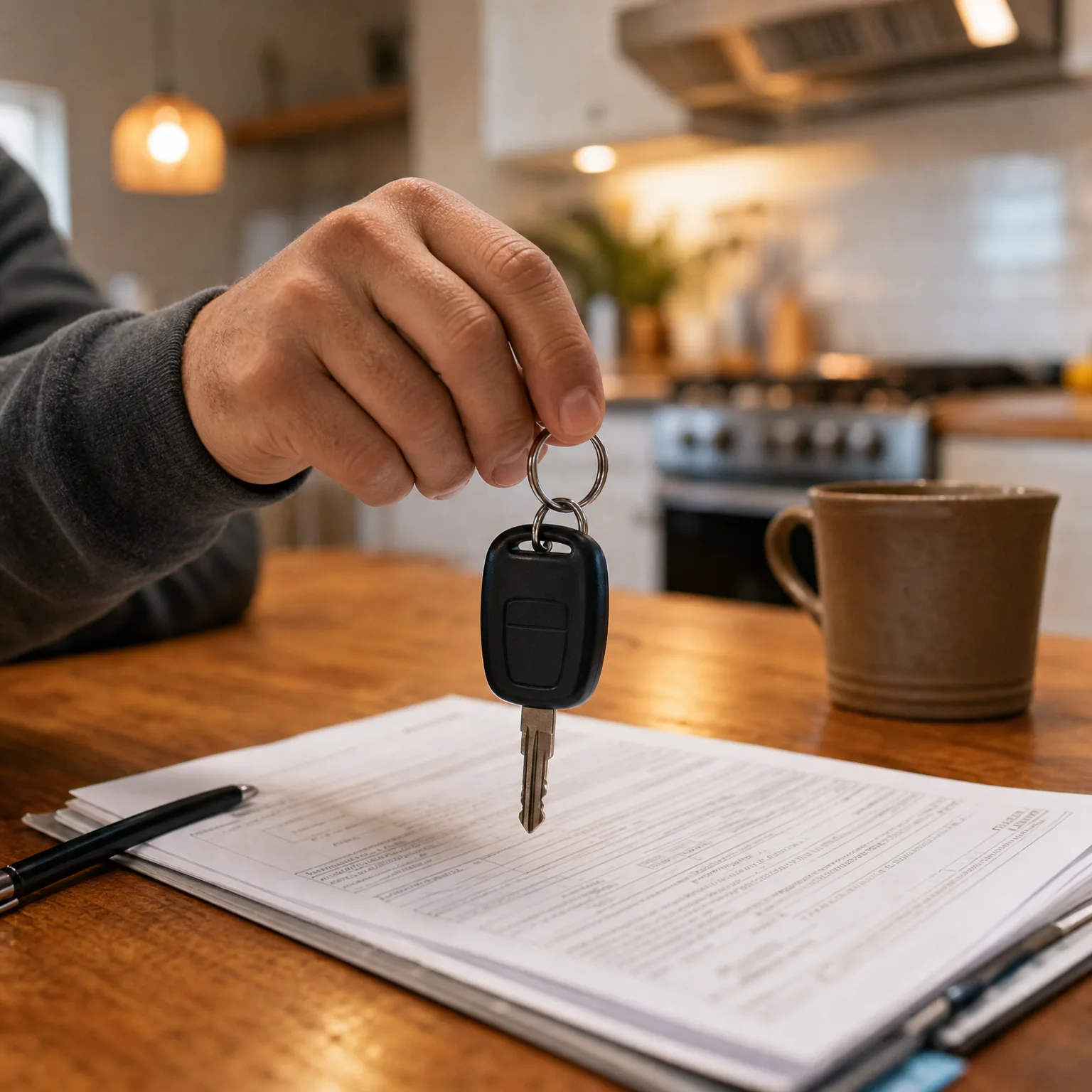
Start by obtaining a certified copy of your sentencing order from the clerk of court in the county where you were convicted. This document lists every condition you must satisfy. Cross-reference the order against the completion certificates you have collected. Missing one document will delay clearance by weeks.
Contact your DUI school provider to request your completion certificate if you have not received it automatically. Florida DUI schools report completion to DHSMV electronically, but the court requires a separate physical or PDF certificate for clearance processing. If you completed treatment, request a discharge summary or completion letter on provider letterhead. For community service, contact the agency where you served hours and request written verification.
Once you have assembled all documents, submit them to the clerk of court in the county of conviction. Most Florida counties accept submissions by mail, in person, or via the clerk's e-filing portal. Include a cover letter listing each sentencing condition and the corresponding proof document. Request that the clerk file a clearance affidavit with DHSMV upon verification. Processing time varies by county: Broward and Miami-Dade typically process within 7-10 business days; smaller counties may take 14-21 days.
The clerk will mail or email a copy of the clearance affidavit to you once filed. DHSMV receives clearance notifications electronically through the Florida Courts E-Filing Portal, but electronic transmission can lag by several days. Bring your copy of the clearance affidavit to DHSMV when you apply for reinstatement to avoid delays if the electronic record has not updated.
DHSMV Reinstatement Process After Court Clearance is Filed
Once the court clearance affidavit is recorded, you can begin the DHSMV reinstatement process. Florida requires: payment of the $45 reinstatement fee plus any additional suspension-specific fees (DUI-related reinstatements carry higher stacked fees in some cases), proof of FR-44 insurance filing from a Florida-licensed carrier for DUI revocations, completion of a driver improvement course if ordered by the judge or required by DHSMV for point-related suspensions, and an in-person visit to a DHSMV driver license office to submit documents and pay fees.
FR-44 filing is mandatory for all DUI-related reinstatements in Florida. FR-44 is Florida's high-risk insurance certificate requiring $100,000/$300,000 bodily injury liability and $50,000 property damage liability — significantly higher than standard SR-22 minimums used in most other states. Your insurer files the FR-44 electronically with DHSMV. Verify the FR-44 is active and on file in DHSMV's system before your reinstatement appointment; FR-44 lapses during the required filing period (typically three years post-DUI) trigger automatic re-suspension.
DHSMV processes reinstatements within approximately seven business days after all documentation is submitted and fees are paid. You will receive a temporary paper license at the DHSMV office; your permanent license arrives by mail within 10-14 days. If your revocation was five years or longer, DHSMV may require you to retake the written knowledge test and road skills test before issuing a new license.
Ignition interlock device installation is required for most DUI reinstatements in Florida. If your sentencing order included an IID requirement, you must have the device installed by a DHSMV-approved vendor before DHSMV will issue your reinstated license. Bring proof of IID installation (vendor certificate) to your reinstatement appointment.

Have Your Proof of Insurance Ready to Reinstate
Get My Post-Reinstatement Quote
Common Court Clearance Delays and How to Avoid Them
The most common delay is incomplete DUI school documentation. Florida DUI schools consist of multiple components: classroom instruction, substance abuse evaluation, and follow-up sessions. Drivers often assume completion after finishing the classroom hours, but the school does not issue the final certificate until you complete the evaluation and any recommended additional sessions. Confirm with your DUI school that you have met all requirements before requesting the completion certificate.
Court fines and fees are the second most common holdup. Florida counties assess multiple fee layers: base fine, court costs, crime prevention fees, and county surcharges. Many drivers pay the base fine but overlook the additional fees. Obtain a detailed account statement from the clerk of court showing the total balance. Pay the full amount and retain the zero-balance receipt. Do not rely on online payment confirmations alone; clerks require receipts showing the account is closed.
Probation violations discovered during clearance review will block the affidavit even if you completed all other conditions. If you were placed on probation and your probation officer has not filed a termination order, the court will not issue clearance until probation is formally discharged. Contact your probation officer to confirm your case status and request that they file a termination motion if you have completed all probationary terms.
Some drivers submit clearance requests to the wrong county. If you were convicted in one county but later had a violation of probation filed in a different county, both courts may need to issue separate clearances. DHSMV will not reinstate until all outstanding court holds are cleared. Check DHSMV's driver license record for active holds before beginning the clearance process.

Finding FR-44 Insurance After Court Clearance is Confirmed
FR-44 insurance is required for all DUI-related reinstatements in Florida and must remain active for three years from your reinstatement date. Most standard carriers (State Farm, Allstate, Liberty Mutual) will not write policies for drivers with recent DUI convictions. You will need to work with a non-standard or high-risk auto insurance carrier that specializes in FR-44 filings.
Carriers confirmed to write FR-44 policies in Florida include Progressive, Geico (selectively for first-offense DUIs), National General, The General, Acceptance Insurance, Bristol West, Dairyland, Infinity, and Kemper. Monthly premiums for FR-44 policies typically range from $140 to $280 per month for drivers with a single DUI and no other violations; premiums increase significantly if you have multiple DUIs, at-fault accidents, or a suspended license violation on your record.
Request FR-44 quotes from at least three carriers before selecting a policy. Premium variation is wide in the non-standard market. Some carriers use telematics-based pricing (usage-based insurance monitoring your driving habits via smartphone app or plug-in device) to reduce premiums for newly-reinstated drivers. Filing fees for FR-44 certificates range from $15 to $50 depending on the carrier; this is a one-time fee separate from your monthly premium.
If you do not own a vehicle, you will need a non-owner FR-44 policy. Non-owner policies provide liability coverage when you drive a vehicle you do not own (borrowed cars, rental cars, or employer vehicles). Non-owner FR-44 premiums are typically $35 to $80 per month, significantly lower than standard FR-44 policies because the insurer's risk is lower. The FR-44 filing requirement applies regardless of whether you own a vehicle; DHSMV will not reinstate your license without proof of FR-44 on file.
What Happens If the Court Denies Your Clearance Request
The court will deny clearance if any sentencing condition remains unsatisfied. The clerk will notify you in writing which condition is incomplete. Common denial reasons include: outstanding fine balance, DUI school not completed, community service hours short of the required total, probation not yet terminated, or ignition interlock compliance reports missing required months.
If your clearance is denied, you must resolve the outstanding condition and resubmit your documentation. There is no appeal process for clearance denials because the court is simply enforcing the terms of your original sentence. Contact the agency or provider associated with the incomplete condition (DUI school, probation officer, community service supervisor) to determine what is needed to satisfy the requirement.
Some drivers discover during clearance review that their sentencing order contains errors or ambiguous language. If your order lists conflicting completion dates or conditions you believe were satisfied but the clerk does not have documentation for, you may need to file a motion with the sentencing judge to clarify or amend the order. This requires an attorney in most cases and can extend your clearance timeline by several months.
Habitual traffic offender (HTO) revocations under § 322.264 require a formal administrative hearing before DHSMV in addition to court clearance. If you were designated an HTO, you must serve a mandatory one-year hard revocation period before you are eligible for hardship or full reinstatement. After the hard period, you petition DHSMV for a hearing. Court clearance must be obtained before the hearing, but the hearing decision — not the clearance alone — determines whether DHSMV will reinstate your license.
Frequently Asked Questions
How long does it take for a Florida court to issue a clearance affidavit after I submit all my documents?
Processing time varies by county but typically ranges from 7 to 21 business days. Broward and Miami-Dade counties process clearances faster (7-10 days) due to higher case volumes and dedicated administrative staff. Smaller counties may take 14-21 days. Submit your documentation as soon as you have all completion certificates; do not wait until you are ready to visit DHSMV.
Can I start the DHSMV reinstatement process before the court files my clearance affidavit?
No. DHSMV will not accept your reinstatement application or process payment until the court clearance is recorded in the state database. Attempting to reinstate before clearance is filed will result in your application being rejected and you will need to reschedule your DHSMV appointment once clearance is confirmed.
What happens if I paid my court fines but the clerk says I still owe money?
Florida counties assess multiple fee layers beyond the base fine: court costs, crime prevention fees, and county surcharges. Obtain a detailed account statement from the clerk showing all assessed fees. If you believe the balance is incorrect, request an audit of your payment history. Some counties apply payments to the oldest charges first, leaving recent fees unpaid even if you made a large payment.
Do I need court clearance if my license was suspended for unpaid tickets or insurance lapse?
No. Court clearance is required only for judicial revocations — cases where a judge ordered your license revoked as part of a criminal sentence. Administrative suspensions (unpaid citations, insurance lapses, refusal suspensions) are processed entirely by DHSMV without court involvement. Pay the applicable reinstatement fee and provide proof of insurance or FR-44 filing directly to DHSMV.
Can I get court clearance if I still owe restitution to a victim?
It depends on your sentencing order. If restitution was listed as a condition precedent to license reinstatement, the court will not issue clearance until restitution is paid in full. If restitution was ordered separately and not tied to your license revocation, the court may issue clearance while you remain on a payment plan. Review your sentencing order or contact the clerk to confirm whether restitution affects clearance eligibility.
What is the difference between a court clearance affidavit and a probation termination order?
A probation termination order formally ends your probationary period and is filed by your probation officer or the court after you complete all probation conditions. A court clearance affidavit is a separate document the clerk issues confirming you satisfied all sentencing conditions, including probation. You need both: probation must be terminated before the clerk will issue clearance, and DHSMV requires the clearance affidavit (not just probation termination) to process reinstatement.
How do I find out which county I need to get court clearance from if I was convicted years ago?
Request a copy of your Florida driving record from DHSMV online or at any driver license office. The record will list all suspensions and revocations, including the county of conviction. If the county is not listed or your record shows multiple revocations from different counties, contact DHSMV customer service at (850) 617-2000 to request a detailed suspension history report showing all active court holds.
Related Articles

Court Clearance Before License Reinstatement
5/18/2026

Florida License Reinstatement Documents: DHSMV Checklist
5/18/2026

Florida Reinstatement Processing Time: Typical Range
5/18/2026

RI Court Clearance for License Reinstatement Guide
5/18/2026

FL License Reinstatement: In Person vs Mail by Cause
5/18/2026

WI Court Clearance for License Reinstatement Steps
5/18/2026