
NC Reinstatement Processing Time: Typical Range and Hearing Path
Free to compare
Why Court Clearance and DMV Reinstatement Are Not the Same Day
North Carolina operates a dual-track suspension framework: civil revocations imposed by NCDMV under statutes like G.S. 20-16.5, and judicial revocations imposed by courts upon conviction under G.S. 20-17. When a court lifts a judicial revocation, that order must be transmitted to NCDMV, processed into their electronic records system, and reconciled against any outstanding civil holds before your driving privilege is reinstated. This transmission and reconciliation period is where the processing gap lives.
Most drivers expect same-day reinstatement after a court hearing. The reality: NCDMV typically processes court orders within 7–14 business days of receipt, assuming no additional holds exist. If your revocation combined a civil DWI revocation (the 30-day administrative action at arrest under G.S. 20-16.5) with a subsequent judicial revocation upon conviction, both must be cleared separately. A court order clearing the judicial piece does not automatically lift the civil piece if it remains outstanding.
The myNCDMV.gov portal shows real-time eligibility status, but it reflects only what has been processed into NCDMV's system at the moment you check. A court clerk may tell you on Friday that your case is closed; the portal may not reflect that clearance until the following Tuesday or later. Plan vehicle access, work schedules, and insurance setup around the 7–14 day window after your hearing, not the hearing date itself.

What Extends Processing Beyond the Typical 7–14 Day Window
Outstanding fines, court costs, or unpaid assessments freeze reinstatement regardless of how long ago your hearing concluded. North Carolina ties reinstatement eligibility to financial compliance: if the court order clearing your revocation also imposed a fine or assessment, NCDMV will not process reinstatement until payment clears. Payment processing itself can add 3–5 business days depending on whether you paid online, by mail, or in person at the clerk's office.
If your original revocation stemmed from a DWI conviction, NCDMV requires proof of completed ADET (Alcohol and Drug Education Traffic School) substance abuse assessment and any court-ordered treatment before reinstatement. This is a prerequisite, not optional. If the court's order does not explicitly state that ADET is complete, NCDMV's reinstatement desk will hold your application until you provide a completion certificate. Most drivers discover this requirement only after their first reinstatement attempt is denied.
Habitual offender revocations under N.C.G.S. § 20-138.5 require a formal restoration hearing before a Division of Motor Vehicles hearing officer, not just a court clearance. These hearings are scheduled weeks out from the date you request one, and processing after a favorable hearing can stretch another 10–14 days. The habitual offender designation is separate from the underlying DWI or points-based revocations that triggered it, so even if those individual suspensions have expired, the habitual offender hold remains until the hearing is completed and approved.


How to Confirm Your Reinstatement Is Actually Complete
Log into myNCDMV.gov and navigate to the License Status section. If your status reads "Valid" with no holds listed, your reinstatement has been processed and you are legally eligible to drive. If your status reads "Revoked" or "Suspended" with a note like "Pending Court Order" or "Outstanding Financial Obligation," the process is not complete regardless of what a court clerk or attorney told you.
Call NCDMV's License & Theft Bureau at (919) 861-3098 if your portal status has not updated within 14 business days of your court hearing or payment submission. Have your driver's license number, case number, and the exact date of your court order or payment when you call. The phone queue is typically longest Monday mornings and shortest mid-afternoon Tuesday through Thursday.
Once your status shows Valid, obtain written confirmation before you drive. Print the myNCDMV portal page showing your Valid status, or request a duplicate license in person at any NCDMV office (the $13 duplicate fee applies). If you are stopped during the gap period between court clearance and NCDMV processing, a printed court order is not sufficient legal proof of reinstatement. Officers verify driving privilege electronically through NCDMV's system, not court records.

Have Your Proof of Insurance Ready to Reinstate
Get My Post-Reinstatement QuoteWhen a Limited Driving Privilege Covers the Reinstatement Gap
North Carolina courts may issue a Limited Driving Privilege (LDP) during certain revocation periods, but the LDP does not substitute for full reinstatement. It is a conditional authorization to drive under court-defined restrictions, typically limited to travel between home, work, school, religious activities, medical appointments, and court-ordered treatment. The LDP remains in effect during the revocation period and terminates when the full revocation ends or when the court revokes the privilege for a violation.
For DWI-based LDP petitions, you must serve a mandatory 45-day hard suspension before any Limited Driving Privilege can be granted by the court under N.C.G.S. § 20-179.3. This 45-day period applies to first-offense Level III–V DWI convictions; higher-level or repeat offenses carry longer mandatory periods. During the hard suspension, no driving is permitted under any circumstances. The LDP application process runs through the superior or district court that imposed the original revocation, not through NCDMV.
If your LDP is still active when your full reinstatement becomes eligible, the LDP does not automatically convert to full privileges. You must still complete the reinstatement process with NCDMV: pay the $65 restoration fee, submit proof of insurance or SR-22 filing if required, and wait for NCDMV to process the clearance. The LDP expires on its stated end date or upon full reinstatement, whichever comes first. Continue following the LDP's restrictions until your NCDMV portal status shows Valid with no holds.

Why SR-22 Filing Must Be in Place Before Your Reinstatement Clears
If your revocation stemmed from a DWI conviction, uninsured driving, or certain high-risk violations, North Carolina will require proof of financial responsibility before reinstatement. This proof typically takes the form of an SR-22 filing submitted by an insurer licensed to write in North Carolina. The SR-22 is not a separate insurance policy; it is a certificate your insurer files electronically with NCDMV confirming you carry at least the state's minimum liability coverage: $50,000 bodily injury per person, $100,000 bodily injury per accident, $50,000 property damage.
North Carolina's electronic insurance verification system (eDMV) allows insurers to transmit SR-22 filings in near-real-time, but NCDMV's reinstatement desk will not process your application until the SR-22 appears in their system. Most carriers file electronically within 24–72 hours of policy issuance, but paper filings or out-of-state carriers can add 5–10 business days. If you purchase a policy on the same day you attempt reinstatement, expect a delay. Set up your SR-22 policy at least one week before your anticipated reinstatement date to avoid extending the gap.
Carriers willing to write post-reinstatement SR-22 insurance in North Carolina include Dairyland, Direct Auto, Geico, The General, National General, and Progressive. Standard carriers like State Farm may write SR-22 filers but premium surcharges will be higher. Expect monthly premiums in the $140–$190 range for minimum liability with SR-22 filing, depending on your driving history, age, and county. The SR-22 filing fee itself is typically $25–$50, separate from the premium.
What Happens If You Drive Before Processing Is Complete
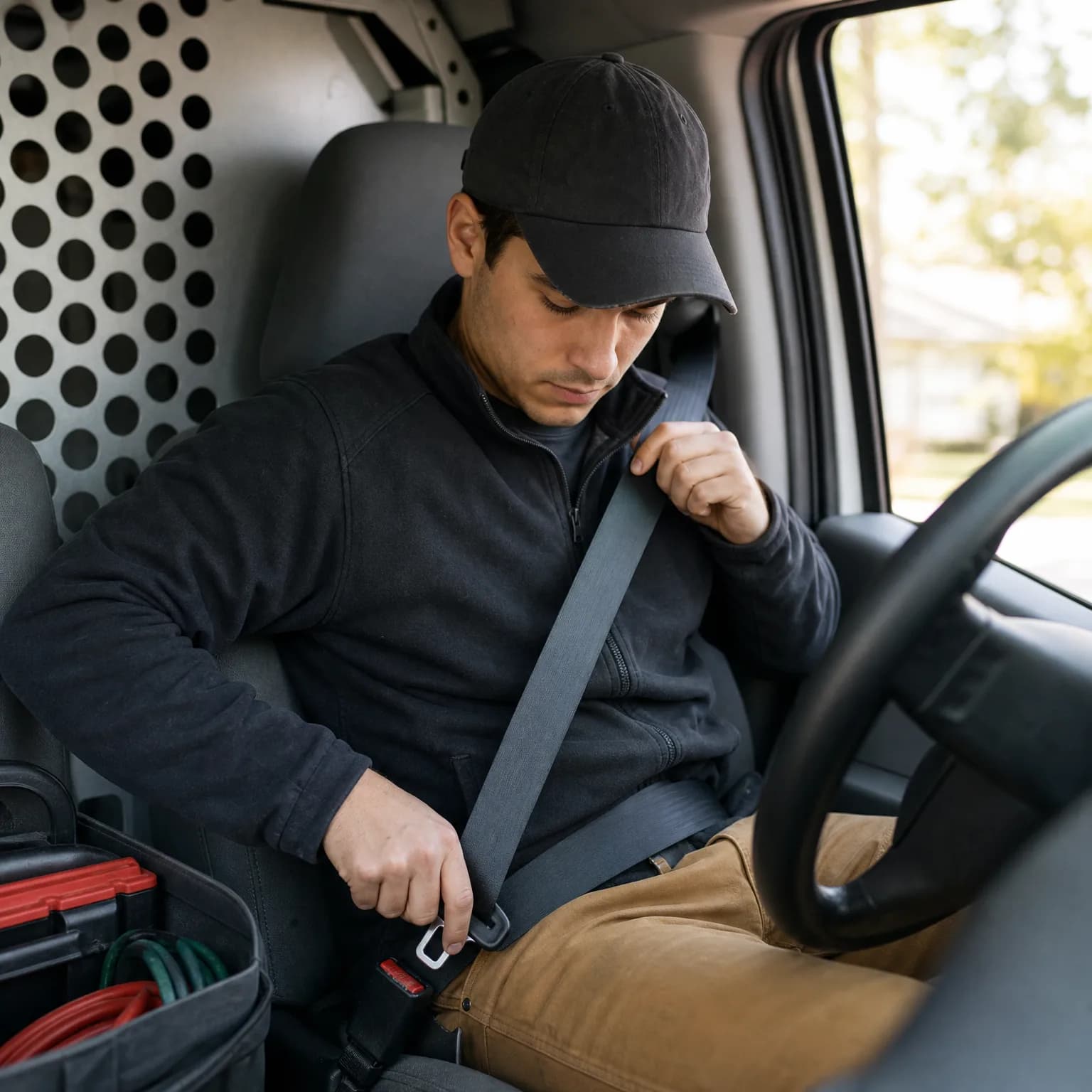
Driving on a revoked license in North Carolina is a Class 3 misdemeanor under G.S. 20-28, punishable by fines up to $200 and potential jail time for repeat offenses. If you are stopped during the processing gap—after your court hearing but before NCDMV updates your status to Valid—the officer's electronic query will return a revoked status. The printed court order in your glove box does not override that electronic record.
A DWLR (Driving While License Revoked) charge adds a new revocation period on top of your existing reinstatement timeline. For a first DWLR offense, the additional revocation is typically one year. For subsequent offenses or DWLR after an impaired-driving revocation, the additional period can extend to multiple years and may disqualify you from future Limited Driving Privilege eligibility. The financial cost stacks: court costs, attorney fees if you choose to contest the charge, and another reinstatement cycle with NCDMV.
Verify your NCDMV portal status before you drive. If it does not read Valid with no holds, do not operate a vehicle regardless of what paperwork you hold. Arrange alternative transportation, continue using rideshare or public transit, or request that an employer or family member drive until the portal confirms reinstatement is complete.
Frequently Asked Questions
How long does it take NCDMV to process a court order lifting a revocation?
NCDMV typically processes court orders within 7–14 business days of receipt, assuming no outstanding fines, assessments, or additional civil holds. If your revocation combined judicial and civil tracks, both must clear separately before reinstatement is complete.
Can I drive immediately after my court hearing clears my revocation?
No. Your driving privilege is not reinstated until NCDMV processes the court order and updates your status to Valid in their system. Driving during the processing gap is treated as Driving While License Revoked, a Class 3 misdemeanor that adds a new revocation period.
What does the myNCDMV portal show while my reinstatement is processing?
During processing, your status will typically read Revoked or Suspended with a note like "Pending Court Order." Once reinstatement is complete, the status changes to Valid with no holds. Check the portal daily after your court hearing or payment submission to monitor progress.
Do I need an SR-22 filing before NCDMV will process my reinstatement?
If your revocation stemmed from a DWI, uninsured driving, or certain high-risk violations, NCDMV requires an SR-22 filing before reinstatement. The SR-22 must appear in NCDMV's electronic system before the reinstatement desk will approve your application, so set up your policy at least one week before your anticipated reinstatement date.
What delays reinstatement beyond the typical 7–14 day window?
Outstanding fines, court costs, unpaid ADET assessments, or incomplete substance abuse treatment freeze reinstatement. Habitual offender revocations require a separate DMV hearing, scheduled weeks out. Payment processing itself can add 3–5 business days depending on the method used.
Does a Limited Driving Privilege automatically convert to full reinstatement when my revocation period ends?
No. The LDP expires on its stated end date or upon full reinstatement, whichever comes first. You must still complete the reinstatement process with NCDMV: pay the $65 restoration fee, submit SR-22 proof if required, and wait for the portal to show Valid status before driving without restrictions.
How do I confirm my reinstatement is actually complete?
Log into myNCDMV.gov and check your License Status. If it reads Valid with no holds, reinstatement is complete. If it still shows Revoked or Suspended after 14 business days, call NCDMV's License & Theft Bureau at (919) 861-3098 with your license number, case number, and court order date.
Related Articles
NC License Reinstatement: In Person vs Mail by Cause
5/18/2026

NC DWI vs Points Suspension Reinstatement Steps
5/18/2026

NC License Reinstatement DMV Visit: What to Bring
5/18/2026
NC License Reinstatement Hearing: Required Cases & Docs
5/18/2026
Why DMV Reinstatement Processing Time Varies Widely
5/18/2026

NC DMV Reinstatement Documents: What to Bring
5/18/2026