
West Virginia License Reinstatement Costs and Process
Free to compare
What West Virginia Actually Charges at Reinstatement
West Virginia's base reinstatement fee is $50, paid to the Division of Motor Vehicles when your suspension period ends and all other conditions are satisfied. This fee applies to administrative suspensions — points accumulation, insurance lapses, unpaid tickets, or failure-to-appear cases.
DUI revocations carry a separate, higher reinstatement fee on top of the $50 base. The exact current amount is published on the WV DMV fee schedule, but expect the total DUI reinstatement fee to exceed $200 when combined with the base administrative fee. Most reinstatement-stage drivers discover this distinction at the counter, not before.
Payment is accepted in person at DMV offices or through the online reinstatement portal for straightforward administrative suspensions. DUI cases, habitual offender revocations, and fraud-related suspensions require additional documentation steps that cannot be completed entirely online — you will need to visit a DMV office or mail certified documents to complete the process.

The Alcohol Test and Lock Program Adds $1,000+ Before You Drive
West Virginia's Alcohol Test and Lock Program (ATLP) is the only mechanism by which DUI-suspended drivers regain restricted driving privileges before the full revocation period ends. ATLP requires ignition interlock device installation, monthly calibration appointments, and continuous enrollment for the duration specified by your offense tier.
First-offense DUI drivers face approximately 15 days of hard suspension before ATLP eligibility opens, but this period varies by offense severity and BAC level — confirm your specific eligibility window against WV Code §17C-5A-3. Once eligible, you apply for a restricted license with route and destination limitations. The restricted license itself is not free: application fees, interlock installation ($75–$150), monthly monitoring fees ($60–$90/month), and the restricted license issuance fee stack before the first legal mile.
If you violate ATLP terms — missing a calibration appointment, attempting to start the vehicle after a failed breath test, or driving outside approved routes — the DMV revokes your restricted license without a hearing. Reinstatement after ATLP violation requires completing the original suspension period in full, paying all fees again, and reapplying. Most drivers learn ATLP compliance rules from their interlock provider, not from DMV materials, which means the first violation is often the result of a missed appointment notification rather than intentional noncompliance.

SR-22 Filing Is Required for Most Suspensions in West Virginia
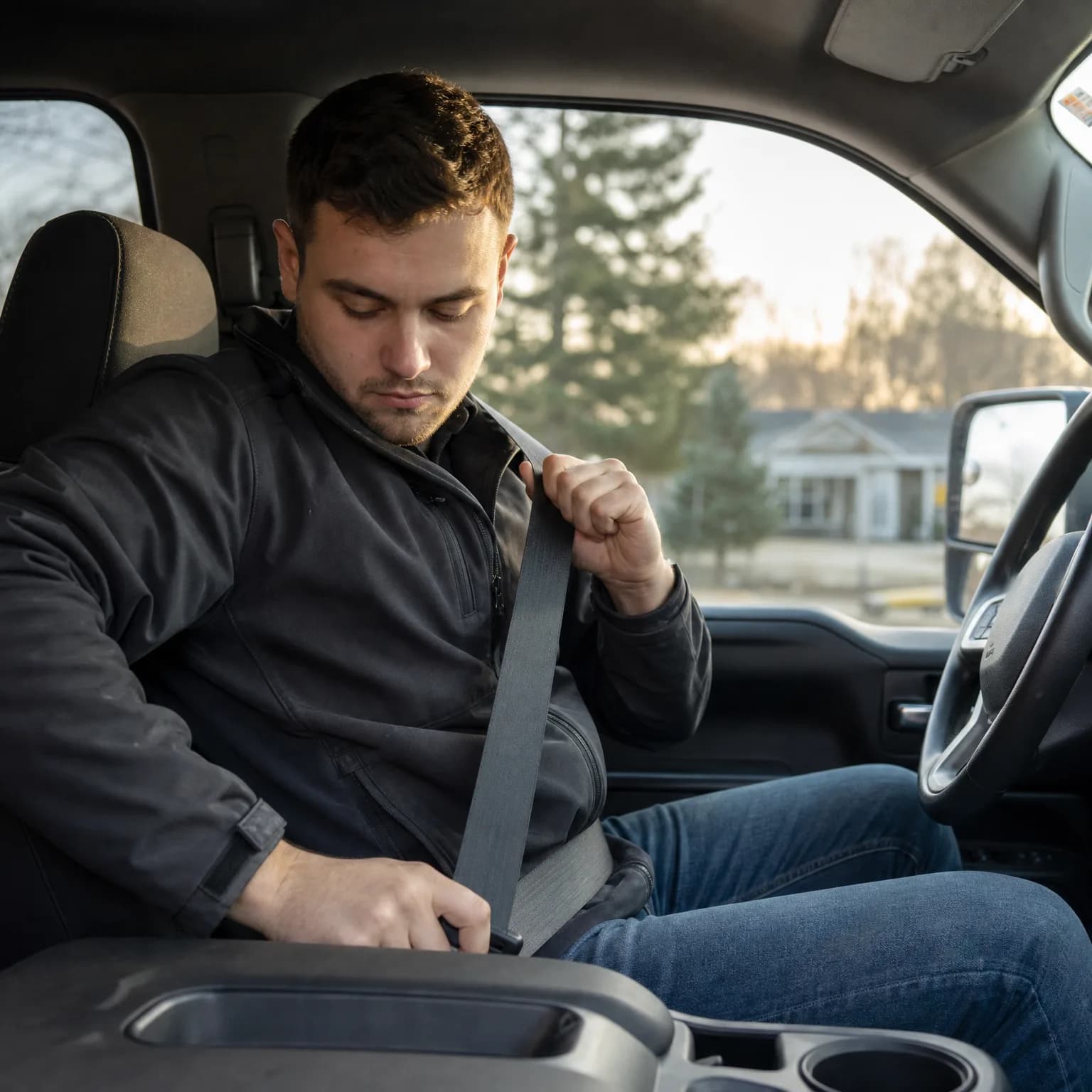
West Virginia requires SR-22 financial responsibility filing for DUI revocations and uninsured motorist suspensions before full reinstatement. The SR-22 is not insurance — it is a certificate your carrier files with the WV DMV proving you carry at least the state's minimum liability limits: $25,000 per person bodily injury, $50,000 per accident bodily injury, and $25,000 property damage.
SR-22 filing itself costs $15–$50 depending on carrier, but the real cost is the premium increase. Carriers writing recently-suspended drivers are almost exclusively non-standard market: Geico, Progressive, The General, Dairyland, and National General write SR-22 policies in West Virginia, but expect monthly premiums between $140 and $240 for minimum-coverage SR-22 policies if your suspension was DUI-triggered. Points-triggered suspensions without DUI typically see $85–$150/month for the same coverage. Estimates based on available industry data; individual rates vary by county, age, vehicle, and driving history.
The SR-22 filing must remain active for the duration specified by your original suspension cause — typically 3 years for DUI, 1–2 years for uninsured driving. If your policy lapses or cancels during the filing period, your carrier notifies the DMV electronically within 24 hours and your license is re-suspended immediately. You restart the filing clock from zero.
When In-Person DMV Visits Are Mandatory
West Virginia requires in-person DMV visits for DUI reinstatements, habitual offender cases, and any suspension involving SR-22 filing verification. Online reinstatement is available for straightforward administrative suspensions — unpaid tickets, insurance lapses resolved with proof of coverage, or points-triggered suspensions where no SR-22 is required — but DUI and fraud cases cannot be completed through the portal.
Bring certified copies of all required documents to your DMV appointment: proof of SR-22 filing (the carrier sends this directly to DMV but bring your own copy), ATLP completion certificate if applicable, DUI education course certificate, payment confirmation for all outstanding fines, and a valid form of ID. Missing any document resets your appointment and delays reinstatement by the DMV's next available slot, which varies by county but typically runs 2–4 weeks in urban offices.
Processing time at the counter varies. Administrative suspensions with all documentation in order are processed same-day. DUI reinstatements require manual review of ATLP compliance records and SR-22 filing status, which can extend processing to 3–5 business days if the system flags any discrepancy. You will not leave with a physical license on the same day unless the suspension was administrative and all filings cleared before your appointment.

Have Your Proof of Insurance Ready to Reinstate
Get My Post-Reinstatement Quote
Habitual Offender Revocations Follow a Separate 10-Year Track
West Virginia's habitual offender statute (WV Code §17B-3-6) triggers a 10-year license revocation when a driver accumulates a specified number of qualifying offenses within a defined period. Qualifying offenses include multiple DUIs, reckless driving convictions, leaving the scene of an accident, and vehicular manslaughter.
Habitual offender reinstatement is not automatic after 10 years. You must petition the DMV for a reinstatement hearing, demonstrate compliance with all underlying suspension requirements (including SR-22 filing for the full habitual offender period), and present evidence of rehabilitation. The hearing officer has discretion to deny reinstatement or impose additional conditions — restricted license with interlock, mandatory driver improvement courses, or extended SR-22 filing beyond the 10-year minimum.
Most habitual offender petitioners do not realize the 10-year clock begins at the date of the revocation order, not the date of the most recent offense. If you were convicted of your third DUI in 2018 but the habitual offender determination was not issued until 2019, your earliest reinstatement eligibility is 2029. This distinction matters for SR-22 filing duration: carriers require continuous coverage for the entire revocation period, and a lapse at year 8 restarts the clock.

What Non-Owner SR-22 Policies Cost When You Lost the Vehicle
If your vehicle was repossessed, sold, or totaled during the suspension period and you do not own a car at reinstatement, you still need SR-22 filing to satisfy WV DMV requirements. Non-owner SR-22 policies provide liability coverage when you drive a borrowed or rented vehicle, and they satisfy the state's financial responsibility filing mandate.
Non-owner policies are cheaper than standard SR-22 policies because they carry no collision or comprehensive risk. Expect $40–$80/month for minimum-limit non-owner SR-22 coverage in West Virginia if your suspension was points-triggered. DUI-triggered non-owner policies run $70–$140/month. Geico, Progressive, and Dairyland write non-owner SR-22 policies in West Virginia; most standard carriers do not offer this product.
The non-owner policy remains in effect as long as you do not own a vehicle. If you purchase a car during the SR-22 filing period, you must upgrade to a standard SR-22 policy and notify your carrier within the timeframe specified in your policy — typically 30 days. Failing to upgrade triggers a lapse notice to the DMV, and your license is re-suspended.
Where Premium Surcharges Actually Come From
West Virginia carriers apply premium surcharges for at-fault accidents and major violations — DUI, reckless driving, and uninsured driving — for 3 to 5 years from the conviction date, not the reinstatement date. This means your premium remains elevated for years after your SR-22 filing period ends.
The surcharge is not a flat dollar amount. Carriers recalculate your risk tier based on the violation type, and you move from standard or preferred underwriting into the non-standard market. A driver who paid $90/month for full coverage before a DUI conviction will see $180–$280/month for minimum SR-22 coverage after reinstatement, and that rate persists until the violation ages off the carrier's lookback window — typically 5 years for DUI, 3 years for most other violations.
Some carriers offer accident forgiveness or violation forgiveness programs, but these rarely apply to major violations like DUI. You cannot buy your way out of the surcharge period. The only path to lower premiums is time: once the violation reaches the end of the carrier's lookback window, you can re-shop and move back to a standard carrier if no new violations appear on your record.
Frequently Asked Questions
How long does West Virginia require SR-22 filing after a DUI?
Can I reinstate my West Virginia license online after a DUI suspension?
No. DUI reinstatements in West Virginia require an in-person DMV visit or mailed documentation to verify SR-22 filing, ATLP completion, and DUI education course certificates. Online reinstatement is available only for administrative suspensions without SR-22 requirements.
What happens if I miss an ATLP calibration appointment in West Virginia?
Missing an ATLP calibration appointment triggers automatic restricted license revocation without a hearing. You must complete the original suspension period in full, pay all reinstatement fees again, and reapply for restricted driving privileges if still eligible.
Do I need SR-22 filing if my West Virginia license was suspended for unpaid tickets?
Typically no. Unpaid ticket suspensions in West Virginia do not require SR-22 filing unless the underlying ticket was for uninsured driving or another violation that independently triggers financial responsibility filing. Verify with the WV DMV before assuming no filing is required.
How much does ignition interlock cost in West Virginia during ATLP enrollment?
Can I use out-of-state SR-22 insurance to reinstate my West Virginia license?
No. West Virginia requires SR-22 filing from a carrier licensed to write policies in West Virginia. Out-of-state filings are not accepted by the WV DMV, even if you moved during the suspension period.
What is the cheapest SR-22 insurance available in West Virginia after reinstatement?
Related Articles
WV License Reinstatement: Steps, Fees, SR-22 Filing
5/18/2026
WV License Reinstatement Course & Exam Requirements
5/18/2026

Virginia License Reinstatement Fees and Documents
5/18/2026

WV License Reinstatement Processing Time: Real Timeline
5/18/2026

WA Reinstatement Fee Tier by Suspension Cause
5/18/2026

Vermont License Reinstatement Fee and Process
5/18/2026