When Your Reinstatement Mailed License Actually Arrives After Submission
Free to compare
What 'Reinstated' Means in States That Mail Your Physical License
Your driving privilege is reinstated the moment your state DMV processes your final payment, accepts your SR-22 filing, and marks your record compliant. That reinstatement date is not the same as the date you receive your physical license card in the mail. In states that issue mailed licenses, the DMV typically hands you a paper receipt or interim document during your reinstatement appointment. That document confirms reinstatement occurred but does not authorize you to drive until the physical card arrives.
The practical consequence: you are reinstated on paper but cannot legally operate a vehicle until the mailed license is in your possession. The gap runs 7–21 days in most mailed-license states, occasionally longer if USPS delays or address verification issues arise. Officers enforce this literally. If you are stopped during the gap with only the interim document, you can be cited for driving without a valid license even though your reinstatement is complete on the state's system.
Mailed-license states include California, Texas, Florida, Georgia, Pennsylvania, and Ohio. Instant-print states (where you walk out with the physical card the same day) include Arizona, Nevada, Colorado, Michigan, Illinois, and Washington. Confirm your state's process before assuming you can drive immediately after your DMV appointment.
What the Interim Document Actually Authorizes (and Doesn't)
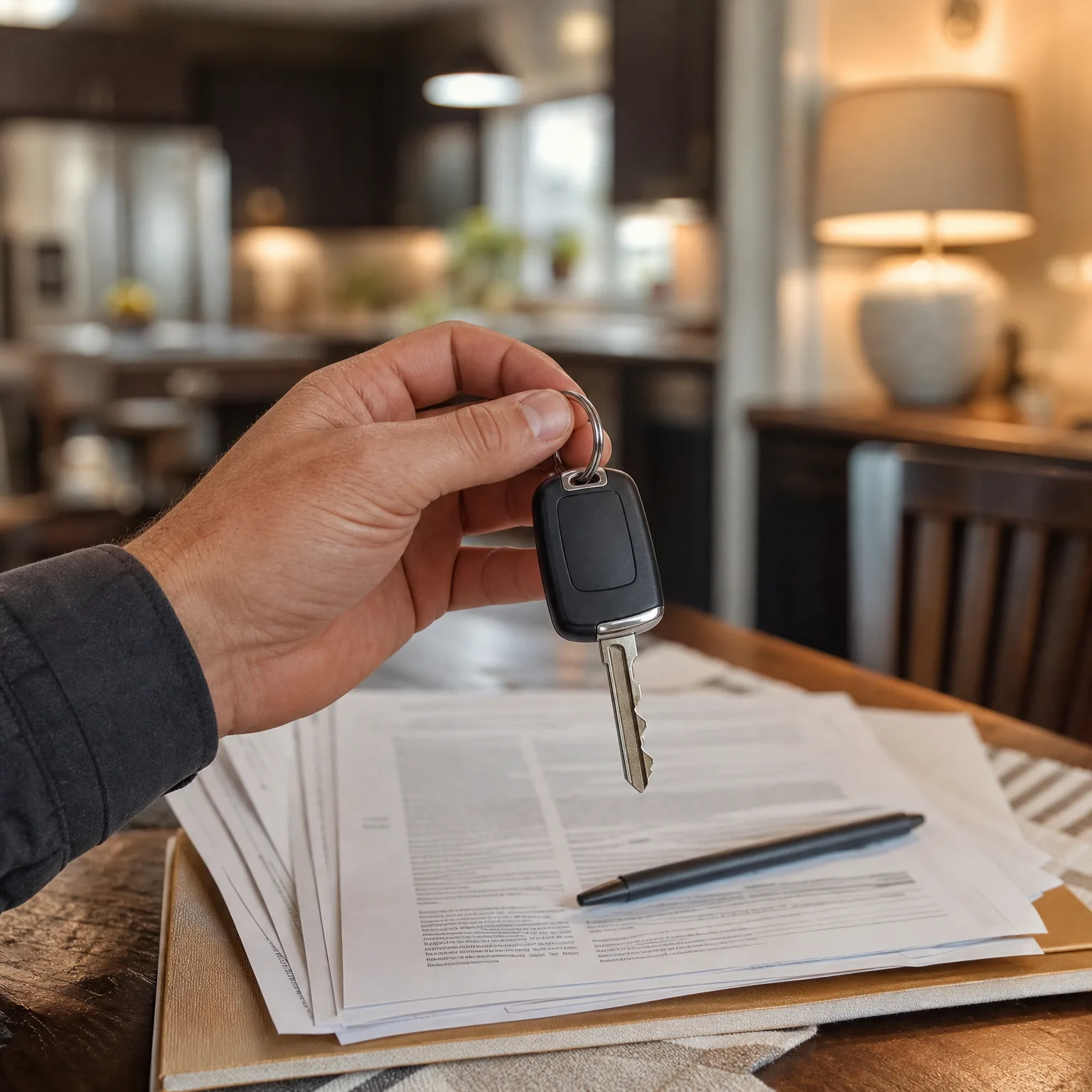
The interim document most mailed-license states issue at reinstatement is a dated receipt showing your reinstatement fee was paid, your SR-22 was accepted, and your driving privilege is restored. It is not a substitute driver's license. California's interim document states explicitly on its face: "Not valid for driving." Texas issues a temporary driving receipt valid for 45 days, but only if your reinstatement appointment occurred in person and your fee cleared same-day. Florida's interim document is a reinstatement confirmation letter with no driving authorization language.
Some states issue a temporary driving permit valid for 30–60 days while the physical card is printed and mailed. These temporary permits authorize driving during the mailing window. Pennsylvania and Ohio issue temporary permits; California and Florida do not. Check the language on the document handed to you at the DMV. If it does not include the words "valid for driving" or "temporary permit," it is a receipt only.
If you are on probation, parole, or a suspended-sentence condition requiring a valid license, the interim document typically does not satisfy that condition. Your probation officer or court order specifies possession of a valid driver's license; the physical card is what satisfies that term. Notify your probation officer of the mailing delay and confirm whether you need written verification from the DMV to bridge the gap.


Why Insurance Companies Care About the Physical Card Date
Your SR-22 filing activates on the date your insurer submits it to the DMV, not the date your physical license arrives. Most states require the SR-22 to be on file before they will process your reinstatement. That sequencing means your insurance policy is already active and premiums are running during the mailing window. You are paying for coverage you cannot yet use because you cannot legally drive.
Some carriers require proof of license receipt before they will bind a standard auto policy after the SR-22 period ends. If your filing period is 3 years and you carried non-owner SR-22 during that time, your transition to a standard policy may require you to upload a photo of your physical license card as proof of reinstatement. The interim document does not satisfy that proof requirement because it does not establish you hold a current valid license.
If you miss a premium payment during the mailing window, your SR-22 filing lapses. The DMV receives an SR-26 cancellation notice from your carrier, and your reinstatement is voided before your physical card even arrives. The state re-suspends your license, and you must restart the reinstatement process from the beginning, including paying the reinstatement fee again. Set up autopay before your reinstatement appointment to eliminate this risk.

Have Your Proof of Insurance Ready to Reinstate
Get My Post-Reinstatement QuoteWhat to Do If Your Mailed License Doesn't Arrive Within 21 Days
Most mailed-license states print and ship within 10 business days of your reinstatement appointment. USPS first-class delivery adds 3–7 days. If your physical card has not arrived 21 days after your DMV visit, call your state's driver's license issuance hotline and request a tracer. Have your reinstatement confirmation number, the date of your appointment, and the address on file ready before calling.
Common delay causes: address mismatch between your reinstatement application and your USPS records, mail forwarding orders that route the card to an old address, and production backlogs during peak renewal periods. Some states will not reissue a mailed license until 30 days have passed from the original print date. California DMV requires 60 days before authorizing a duplicate. If your address was wrong, you must visit a field office in person to update it and request a reprint; most states charge a duplicate license fee for address-error reprints.
If you need to drive before the card arrives, some states issue a temporary driving permit at a field office once the tracer confirms the original card was lost or undeliverable. This permit is valid for 30–60 days and authorizes driving while the replacement is printed. Confirm your state offers this option before making the trip; not all do.
How Probation Officers and Employers Verify Reinstatement During the Gap
If your probation terms or employment require proof of a valid driver's license, the interim document alone typically does not satisfy that requirement. Most probation officers and HR departments interpret "valid driver's license" as possession of the physical card. Some will accept a DMV-generated driving record abstract showing your reinstatement date and current valid status, combined with the interim document, as interim proof until the card arrives.
Request an official driving record from your state DMV on the same day as your reinstatement appointment. Most states offer instant online records through their DMV portal; download and print it immediately. The record will show your reinstatement date, your current license status as "valid," and your SR-22 filing on record. Pair this abstract with your interim document when reporting to your probation officer or submitting to HR. Call ahead to confirm this combination will be accepted.
If your probation officer will not accept interim documentation, request a letter from the DMV on agency letterhead confirming your reinstatement date and stating that your physical card is in production. Some DMV field offices will print this letter on request; others require a formal records request with a 5–10 business day turnaround. Submit the request the same day as your reinstatement appointment to minimize delay.

What Happens If You're Stopped Driving on the Interim Document
If you are pulled over during the mailing window and present only the interim document, the officer will run your license number through their system. The system will show your driving privilege as valid and reinstated. Whether the officer issues a citation depends on state law and the specific wording of your interim document. In states where the interim document explicitly states it is not valid for driving, officers have discretion to cite you for driving without a license in possession even though your privilege is reinstated.
California Vehicle Code 12951 requires drivers to have their physical license card in possession while operating a vehicle. Presenting a reinstatement receipt does not satisfy this statute. The citation is typically a fix-it ticket: if you bring your physical license to the courthouse or CHP office within the timeframe specified, the citation is dismissed. If your physical card has not arrived by the dismissal deadline, you must request an extension and provide proof that the card is still in production.
In states that issue temporary driving permits valid during the mailing window, presenting the permit satisfies the license-in-possession requirement. Officers in these states should not cite you if the temporary permit is valid and matches your name and photo. If you are cited despite holding a valid temporary permit, the citation is typically dismissed at arraignment once you present the permit to the court.
Frequently Asked Questions
Can I drive legally with just the interim document after my reinstatement appointment?
In most mailed-license states, no. The interim document is a receipt confirming reinstatement occurred, not authorization to drive. California, Florida, and Georgia interim documents explicitly state they are not valid for driving. States that issue temporary driving permits (Pennsylvania, Ohio, Texas in some cases) authorize driving during the mailing window, but only if the document includes language stating it is a valid temporary permit.
How long does it take for a mailed reinstatement license to arrive?
Typically 10–21 days from your reinstatement appointment. Most states print and ship within 10 business days; USPS delivery adds 3–7 days. If your card has not arrived after 21 days, call your state DMV to request a tracer. Address mismatches and mail forwarding orders are the most common delay causes.
What happens if my SR-22 insurance lapses while I'm waiting for my physical license?
Your carrier files an SR-26 cancellation notice with the DMV, and your reinstatement is voided immediately. The state re-suspends your license before your physical card arrives. You must restart the reinstatement process, pay the reinstatement fee again, and file a new SR-22. Set up autopay before your reinstatement appointment to prevent this.
Will my probation officer accept the interim document as proof of a valid license?
Most will not. Probation terms typically require possession of the physical license card. Request an official driving record abstract from your state DMV showing your reinstatement date and valid status, and present it alongside the interim document. Some probation officers will accept this combination as interim proof until the card arrives; call ahead to confirm.
Can I request a temporary permit if my mailed license is delayed?
Some states issue temporary permits at DMV field offices once a tracer confirms the original card was lost or undeliverable. The temporary permit is valid for 30–60 days and authorizes driving while the replacement is printed. California, Texas, and Pennsylvania offer this option; Florida and Georgia typically do not. Confirm your state's policy before visiting the field office.
What should I bring if I'm pulled over during the mailing window?
Carry your interim document, a printed copy of your official driving record showing valid reinstated status, and proof of SR-22 insurance. If the officer cites you for driving without a license in possession, the citation is typically a fix-it ticket dismissed once you present your physical card to the court within the specified timeframe.
Related Articles
Same-Day vs Mail License: Reinstatement Timeline by State
5/18/2026
Same-Day vs Mailed License at Reinstatement
5/18/2026
Who Can Reinstate a License by Mail: Eligibility Guide
5/18/2026

CA License Reinstatement: DL-44 to Mailed Card Timeline
5/18/2026
Reinstatement Card vs Effective Date: When Can You Drive?
5/18/2026

Where License Reinstatement Steps Diverge by State
5/18/2026