
Which Optional Coverages Reinstated Drivers Should Consider
Free to compare
Why Optional Coverage Matters More After Reinstatement
Your license is back. Your SR-22 filing is active. You're legal to drive again. But you're also one incident away from a second suspension — and the threshold for triggering it is lower than it was before your first suspension.
Most recently reinstated drivers focus entirely on meeting minimum liability requirements and keeping their SR-22 filing continuous. That's correct prioritization. But three optional coverages — rental reimbursement, roadside assistance, and uninsured motorist protection — reduce the likelihood of a gap, a lapse, or a secondary violation during the 1-5 year period your driving record is under scrutiny.
These coverages don't prevent violations. They prevent the situations that lead to violations when you're already one mistake away from losing your license again.
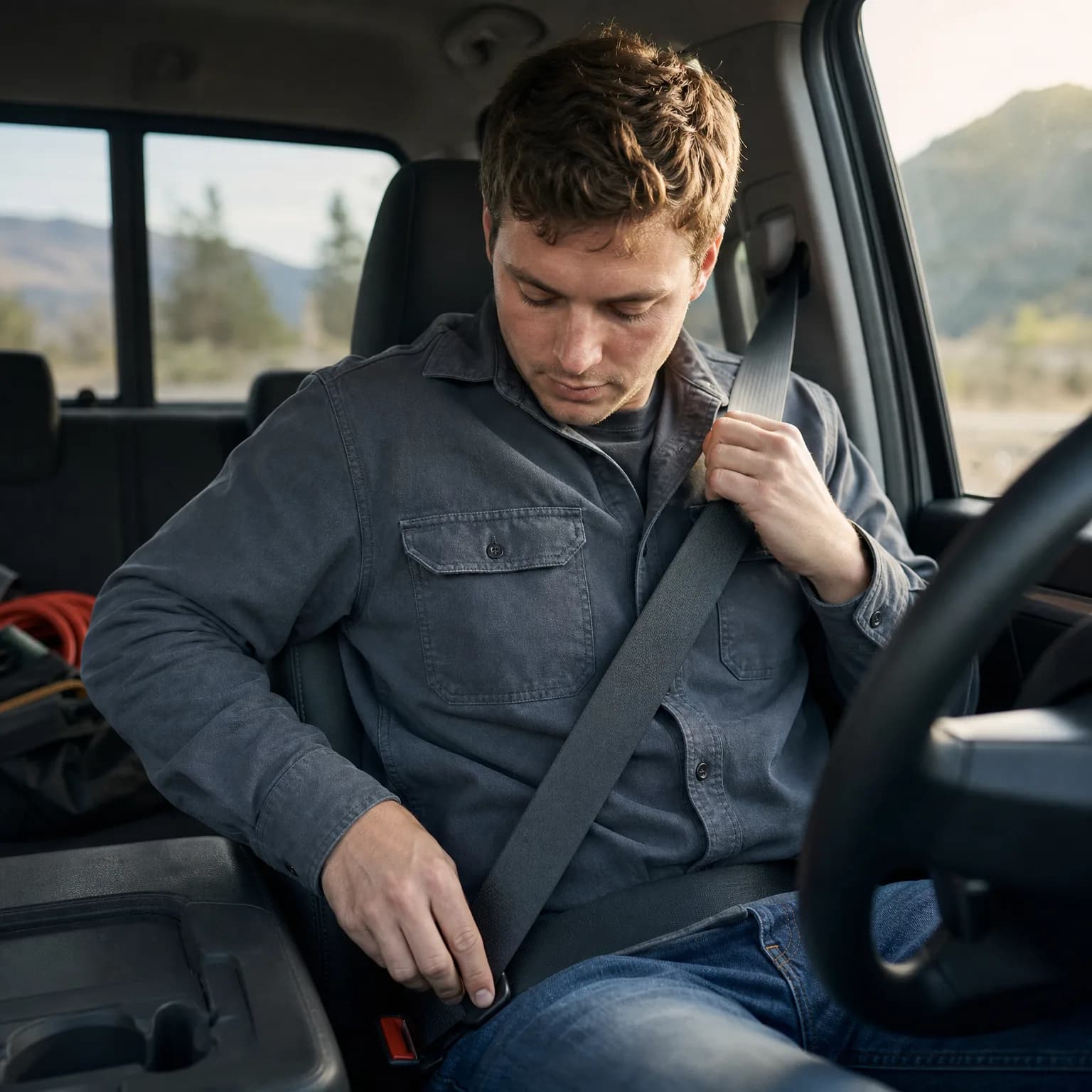
Rental Reimbursement: Preventing Gaps During Repairs
Rental reimbursement pays for a rental car while your vehicle is in the shop after a covered claim. Typical policies cover $30-$50 per day for 10-30 days, depending on the carrier and the tier you select. Cost: $15-$30 per six-month term for most drivers.
Why it matters post-reinstatement: if your car is undriveable for two weeks and you don't have rental coverage, you face a choice — miss work, borrow a car that may not be on your policy, or drive without proper coverage. Each option carries reinstatement risk. Missing work can cascade into missed SR-22 premium payments. Driving an uninsured borrowed vehicle is exactly the violation pattern that triggers a second suspension in most states. Rental coverage eliminates the gap. You stay mobile, you stay employed, you stay compliant. For drivers whose original suspension involved uninsured operation or a lapse-related trigger, this is the single most valuable optional coverage available.


Roadside Assistance: Avoiding Exposure on the Shoulder
Roadside assistance covers towing, flat tire changes, lockout service, fuel delivery, and jump-starts. Most policies include 3-5 service calls per year with a $100-$150 towing distance limit per call. Cost: $10-$20 per six-month term.
The value isn't convenience. The value is not being stranded in a situation where law enforcement gets involved. If your car breaks down on the highway and you don't have roadside coverage, you're waiting for a tow truck you may not be able to afford. That wait puts you on the shoulder during rush hour, increases the likelihood of a trooper stop, and creates documentation of your location and circumstances — documentation that becomes relevant if any secondary issue arises.
Drivers whose original suspension involved DUI, points accumulation, or refusal charges are particularly vulnerable here. A stranded-driver interaction with law enforcement is low-risk for a clean-record driver. For a recently reinstated driver, it's a documented contact that can be referenced later if any new charge emerges. Roadside coverage keeps you off the shoulder and out of that exposure window.

Have Your Proof of Insurance Ready to Reinstate
Get My Post-Reinstatement QuoteUninsured Motorist Coverage: Protecting Against the Other Driver's Lapse
Uninsured motorist (UM) coverage pays for your injuries and, in some states, your vehicle damage when you're hit by a driver with no insurance or insufficient liability limits. It's required in some states and optional in others. Cost varies widely by state: $20-$80 per six-month term is typical for minimum UM limits.
Why post-suspension drivers should prioritize it: if an uninsured driver hits you and you don't have UM coverage, you're left paying out-of-pocket for medical bills and repairs. That financial strain can trigger missed premium payments, which triggers an SR-22 lapse, which triggers an automatic license suspension in most states — even if the accident wasn't your fault.
UM coverage decouples someone else's non-compliance from your reinstatement status. Your injury costs are covered. Your car gets repaired. You stay current on your premiums. You don't re-enter the suspension cycle because another driver failed to maintain coverage.
Drivers in states where UM is optional (Texas, Florida, Georgia, Ohio, among others) should add it at minimum limits during the SR-22 filing period. The cost is lower than the risk it mitigates.
What Not to Add: Coverage That Doesn't Fit the Risk Profile
Gap coverage, new car replacement, and custom equipment coverage are not priorities for recently reinstated drivers unless you financed a new vehicle immediately after reinstatement — which is rare given the credit and rate environment post-suspension.
Loan/lease payoff (gap) coverage makes sense only if you owe more than your car is worth. Most reinstated drivers are driving older vehicles they own outright or financed years ago. Gap premiums for high-risk drivers run $40-$80 per six-month term. That money is better spent on rental reimbursement or UM coverage.
Comprehensive and collision are not optional if you have a loan or lease — the lienholder requires them. But if you own your car outright and it's worth less than $4,000, dropping collision and keeping only liability plus the three optional coverages covered here often produces better financial outcomes during the SR-22 filing period. Run the math with your carrier before making that decision.

How to Add Optional Coverages to Your SR-22 Policy
Most non-standard carriers that write SR-22 policies allow you to add optional coverages at the time of purchase or during your policy term. Call your agent or log into your online account to request them. Changes typically take effect the same day or within 24 hours.
Expect your six-month premium to increase by $45-$130 total if you add all three coverages (rental, roadside, UM at minimum limits). That's $7-$22 per month. For most reinstated drivers, that cost is manageable and the protection is disproportionately valuable during the first 1-2 years post-reinstatement when your record is still flagged.
Some carriers bundle roadside assistance with rental reimbursement at a slight discount. Ask whether a package is available before adding coverages individually. Verify that adding optional coverages doesn't affect your SR-22 filing status — it shouldn't, but confirm with your agent that the filing remains continuous and that your state's DMV will receive updated proof of coverage if required.
Frequently Asked Questions
Does adding optional coverage affect my SR-22 filing?
No. Adding rental reimbursement, roadside assistance, or uninsured motorist coverage to your policy does not affect your SR-22 filing status. Your filing remains continuous as long as your policy stays active and your premiums are paid on time. Some states require your carrier to notify the DMV when any coverage change occurs, but optional coverage additions do not interrupt the filing.
Can I add rental coverage after my car is already damaged?
No. Rental reimbursement coverage must be in place before the loss occurs. You cannot add it retroactively after an accident or breakdown. If your car is already in the shop and you don't have rental coverage on your policy, you'll need to pay out-of-pocket for a rental or arrange alternative transportation.
Is uninsured motorist coverage required in all states?
No. Uninsured motorist coverage is required in some states and optional in others. States that mandate UM include Illinois, Kansas, Maine, and several others. States where it's optional include Texas, Florida, Georgia, and Ohio. Check your state's requirements, but even where it's optional, recently reinstated drivers should add it at minimum limits.
How much does roadside assistance cost on a high-risk policy?
Roadside assistance typically costs $10-$20 per six-month term on a high-risk or SR-22 policy, roughly the same as it costs on a standard policy. The coverage includes towing, tire changes, lockouts, and jump-starts. Most carriers allow 3-5 service calls per year with towing distance limits of $100-$150 per incident.
Should I drop collision to afford optional coverages?
Only if you own your car outright and its value is low enough that collision premiums exceed its replacement cost over 2-3 years. If you have a loan or lease, collision is required. If your car is worth less than $4,000 and you're paying $400+ per six-month term for collision on a high-risk policy, dropping it and adding rental, roadside, and UM may produce better financial outcomes during your SR-22 filing period.
Can I use roadside assistance from my credit card instead?
Some credit cards include roadside assistance as a cardholder benefit, but coverage is often limited to one or two service calls per year and may not include the full towing distance you need. If you already have credit card roadside benefits, confirm the annual service limit and towing distance before deciding whether to add carrier-provided roadside coverage. For recently reinstated drivers, carrier-provided coverage is more reliable.
Related Articles

Coverage Selection for Reinstated Drivers With Older Cars
5/18/2026

Set Up Coverage After Buying a Car Post-Reinstatement
5/18/2026
Non-Owner SR-22 Insurance After Reinstatement
5/18/2026

SR-22 Lapse After Reinstatement Re-Triggers Suspension
5/18/2026

Non-Owner SR-22 Coverage at Reinstatement Explained
5/18/2026

Non-Owner SR-22 Insurance After License Reinstatement
5/18/2026